

Stocking lab-grown diamonds with proper certification is no longer optional for UK jewellers who want to compete on trust and transparency. Buyers walking into your shop, whether in Hatton Garden or the Birmingham Jewellery Quarter, increasingly ask for grading reports before they ask about price. The International Gemological Institute has become the dominant certification body for lab-grown stones, and understanding how to source IGI certified lab diamonds for your jewellery shop directly affects your margins, your reputation, and your ability to fulfil repeat orders without quality surprises. Getting this right means building a supply chain that’s consistent, verifiable, and commercially viable for the sizes and grades your customers actually want.
The Importance of IGI Certification for Lab-Grown Diamonds
IGI certification serves as the baseline quality assurance standard across the global lab-grown diamond trade. For UK retailers, it functions as both a sales tool and a risk management mechanism. A graded stone with an IGI report removes ambiguity from the buying conversation: your customer sees the exact colour, clarity, cut, and carat weight assessed by an independent laboratory, which builds confidence far more effectively than any verbal assurance.
From a commercial standpoint, IGI reports also protect you during disputes. If a customer questions quality after purchase, the report provides documented evidence of what was sold. This is particularly valuable for independent jewellers who lack the brand recognition of larger chains and rely on credibility built one transaction at a time.
Why Retailers Prioritise IGI Grading Reports
IGI has invested heavily in lab-grown specific grading infrastructure, which is why their reports carry weight that other certificates sometimes lack in this category. Their grading consistency across global laboratories means a D/VS1 graded in Mumbai reads the same as one graded in Antwerp. For retailers ordering from international suppliers, this consistency eliminates a major source of stock variance.
The practical benefit is straightforward: you can order remotely with confidence. If you’re sourcing 1ct rounds in the D-G, VS2-SI1 range, an IGI report lets you assess each stone without physically inspecting it first. This matters enormously when you’re building inventory from overseas manufacturers and need to trust that what arrives matches what was described.
Understanding the Specifics of Lab-Grown Identification
IGI reports for lab-grown diamonds include a clear declaration of origin, stating whether the stone was produced via Chemical Vapour Deposition (CVD) or High Pressure High Temperature (HPHT). This distinction matters commercially because CVD and HPHT stones can behave differently under certain lighting conditions, and some customers have preferences based on what they’ve researched online.
The report also notes any post-growth treatments detected, such as HPHT annealing applied to CVD stones to improve colour. Knowing this upfront prevents awkward conversations later. A treated stone isn’t inherently inferior, but transparency about its history is non-negotiable in a market where consumer education is accelerating rapidly.
Identifying Reputable Wholesale Suppliers and Manufacturers
Finding reliable suppliers is where most jewellers either build a competitive advantage or create ongoing headaches. The lab-grown diamond market has expanded quickly, and not every supplier offering attractive prices can actually deliver consistent quality and reliable fulfilment. Your sourcing strategy should prioritise suppliers who manufacture or have direct relationships with growers, rather than those operating as intermediaries adding margin without adding value.
Vetting International B2B Marketplaces
Platforms like RapNet, VirtualDiamond, and various Indian B2B portals list thousands of IGI certified lab-grown stones. These marketplaces are useful for price benchmarking and discovering new suppliers, but they require careful vetting. Check how long a supplier has been active on the platform, read transaction reviews, and request sample stones before committing to larger orders.
Watch for inconsistencies between listed specifications and actual IGI reports. Some sellers upload generic images or list stones that are already sold. A reliable test: request the IGI report number, verify it independently online, then cross-reference the details with what’s listed. If anything doesn’t match, move on immediately.
Building Relationships with Primary Growers
The most profitable sourcing relationships for UK jewellers are direct partnerships with manufacturers who grow, cut, and certify under one operation. This eliminates middlemen and gives you access to better pricing on the commercial sweet spot: 0.5ct to 3ct stones in D-H colour and VS2-SI1 clarity.
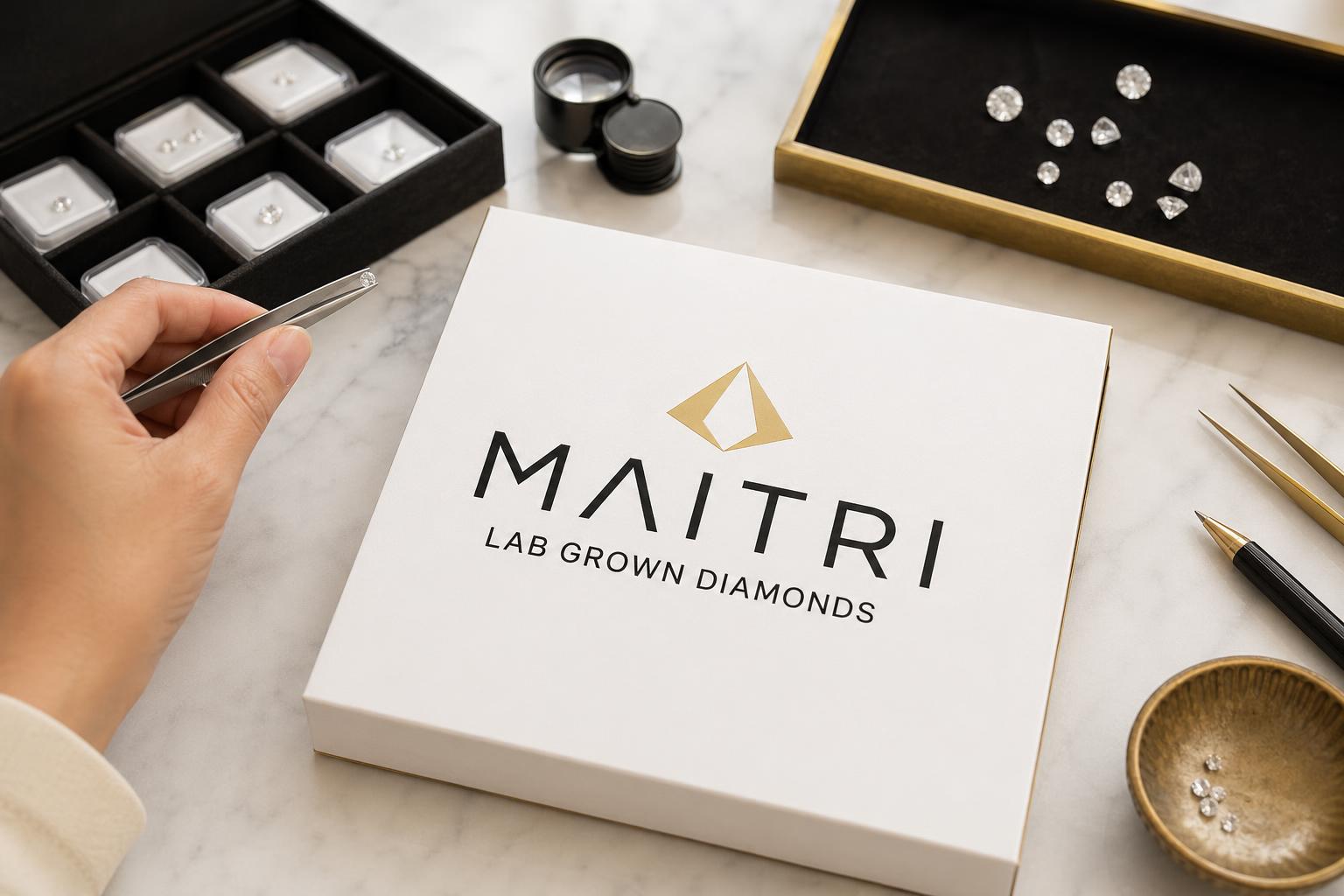
Maitri Diamonds operates on this model, manufacturing lab-grown diamonds and supplying directly to trade partners. Working with a manufacturer-backed supplier means you get consistency across repeat orders: the same cut quality, the same grading standards, and pricing that reflects actual production costs rather than layered wholesale markups. For independent jewellers, this kind of relationship translates directly into healthier margins and fewer sourcing gaps during busy periods.
Analysing Quality and Value in the Sourcing Process
Price per carat is only meaningful when measured against actual quality. Two IGI certified stones with identical grades on paper can look dramatically different in hand, which is why understanding what to look for beyond the certificate is essential.
Evaluating the 4Cs within IGI Parameters
Focus your buying on cut quality first. A well-cut 1ct H/SI1 will outsell a poorly cut D/VVS1 every time because brilliance, fire, and scintillation are what customers notice in the display case. For round brilliants, look for table percentages between 54-58% and depth between 60-62.5%. These ranges consistently produce the best light performance.
Colour and clarity are where you manage margin. The D-F range commands premium pricing but the visual difference between F and G is negligible to most retail buyers. Stocking G-H stones at lower cost while maintaining excellent cut grades gives you a stronger margin position without sacrificing visual appeal. This is where commercial sourcing intelligence separates profitable shops from those just moving volume.
Spotting Growth Remnants and Post-Growth Treatments
CVD diamonds sometimes exhibit brown or greyish undertones that result from the growth process. These can be improved through HPHT treatment, and IGI reports will note this. The treatment itself is stable and permanent, so it’s not a durability concern, but you should factor it into your pricing.
Metallic inclusions are more common in HPHT-grown stones and can appear as dark spots visible under magnification. While an SI1 grade permits some inclusions, the type and position matter for face-up appearance. Always request high-resolution imagery or video alongside the IGI report, and inspect stones under standard jeweller’s lighting before adding them to your display inventory.
Logistics, Customs, and Importation Compliance
Bringing lab-grown diamonds into the UK involves specific customs classifications and VAT obligations that differ from natural diamond imports. Getting this wrong can result in delayed shipments, unexpected costs, or compliance issues with HMRC.
Navigating Duty and VAT for UK Retailers
Lab-grown diamonds are classified under a different commodity code than natural diamonds for UK customs purposes. The current import duty rate for synthetic stones is 0%, but you are still liable for 20% VAT on the declared value at the point of entry. Ensure your supplier provides accurate commercial invoices that reflect the true transaction value: undervaluation triggers HMRC audits and potential penalties.
Work with a customs broker experienced in gemstone imports. They’ll handle the correct classification, ensure your documentation meets Border Force requirements, and help you reclaim input VAT through your standard returns. If you’re importing regularly, consider setting up a deferment account to smooth cash flow around larger shipments.
Verifying Authenticity and Managing Inventory
Every IGI certified stone that enters your inventory should be independently verified before it reaches a customer. This isn’t about distrusting your supplier: it’s about maintaining the chain of accountability that protects your business.
Utilising the IGI Online Report Verification Tool
IGI provides a free online verification portal where you can enter any report number and confirm the grading details. Make this a standard part of your intake process. Cross-check the carat weight, colour, clarity, and cut grade against the physical report that accompanies the stone. Any discrepancy, even a minor one, should be flagged with your supplier immediately.
This verification step takes under two minutes per stone and provides documented proof that you’ve done your due diligence. If a customer ever questions authenticity, you can demonstrate that the stone was independently verified at the point of purchase.
Best Practices for Laser Inscription Inspection
Every IGI certified lab-grown diamond carries a laser inscription on the girdle that matches the report number. Use a standard 10x loupe or a gemological microscope to confirm the inscription is present, legible, and matches the accompanying paperwork.
Inscriptions that appear blurred, partially removed, or mismatched are immediate red flags. Legitimate suppliers will replace any stone where the inscription doesn’t align with the report. Build this inspection into your stock intake checklist alongside weight verification and visual quality assessment.
Marketing Your IGI Certified Collection to Customers
Your sourcing efforts only pay off when customers understand the value of what you’re offering. Display IGI reports prominently alongside each stone in your cases. Train your sales team to walk customers through the report, explaining what each grade means in plain language rather than technical jargon.
Highlight the traceability angle: each stone has a unique report number, a laser inscription, and an independently verified origin. This story resonates strongly with younger buyers who research purchases extensively before visiting a shop. Use your website and social media to show the verification process, photograph the inscriptions, and explain how your sourcing standards protect the customer.
Pricing transparency also differentiates you. Lab-grown diamonds offer significantly lower price points than natural equivalents at the same grade, and customers appreciate retailers who explain this openly rather than obscuring the comparison. Suppliers like Maitri Diamonds, rated 4.7 stars by customers for quality, consistency, and service, provide the competitive pricing structure that lets you pass genuine value to your buyers while protecting your own margins.
If you’re looking to refine your sourcing or explore supply options tailored to your shop’s specific needs, speaking directly with a manufacturer makes all the difference. Get in touch with our team to discuss pricing, available stock, or flexible supply arrangements that fit your business.