

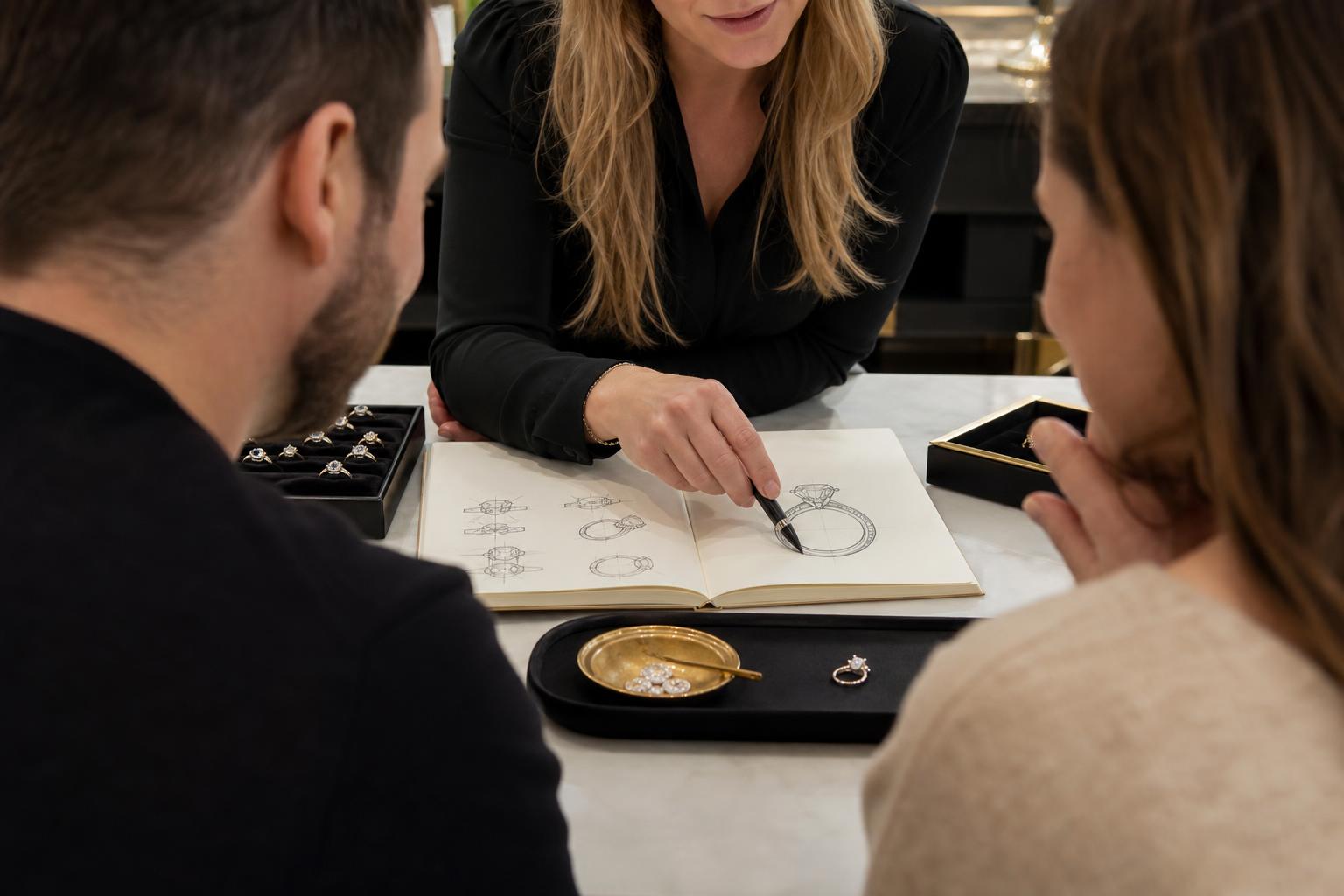
Offering a bespoke engagement ring used to mean sourcing a mined stone, negotiating with multiple middlemen, and hoping the final product matched the client’s vision. That process has changed dramatically. Lab-grown diamonds now account for a growing share of the UK engagement ring market, and the demand for custom designs has followed. For jewellers and designers, this shift creates a real commercial opportunity: the ability to offer custom lab grown diamond engagement rings at price points that make bespoke work accessible to a far wider client base. The margins are healthier, the sourcing is more predictable, and the creative possibilities are broader than ever. Whether you are an independent jeweller looking to expand your bespoke offering or a designer refining your process, understanding how to guide clients through a custom lab-grown ring build is now essential knowledge. This piece breaks down every stage, from stone selection to final certification, with trade-specific insight throughout.
The Benefits of Choosing Lab-Grown Diamonds for Custom Jewellery
Ethical Sourcing and Environmental Sustainability
Lab-grown diamonds remove the ethical ambiguity that has plagued the mined diamond trade for decades. Clients increasingly ask pointed questions about origin, and a laboratory-created stone provides a clear, verifiable answer. The carbon footprint of growing a diamond in a controlled environment is a fraction of that associated with large-scale mining operations, and this resonates strongly with UK buyers under 40.
For jewellers, the ethical narrative is a genuine sales tool. You are not simply selling a stone; you are offering peace of mind. Retailers in Hatton Garden and the Birmingham Jewellery Quarter report that sustainability credentials now influence purchasing decisions at the counter, particularly for engagement rings where sentiment and values intersect.
Exceptional Value and Greater Quality for Your Budget
A 1.5ct, D-colour, VS1 lab-grown round brilliant currently trades at roughly 70-80% less than its mined equivalent at wholesale. That price difference does not reflect inferior quality: it reflects a different supply chain. The crystal structure, optical properties, and hardness are identical.
This pricing dynamic is powerful for bespoke work. A client with a £3,000 budget who might have settled for a 0.7ct mined stone can instead commission a 1.2ct lab-grown centre stone with a fully custom setting. The perceived value jumps significantly, and your margin on the finished piece remains strong. For trade buyers, sourcing from a supplier like Maitri Diamonds, which focuses on commercially relevant grades (D-H, VS2-SI1) in the 0.5-3ct range, means you can quote confidently without worrying about stock availability.
Selecting the Perfect Centre Stone for Your Bespoke Ring
Understanding the Four Cs in the Laboratory Context
The grading criteria for lab-grown diamonds are identical to those used for mined stones. IGI and GIA both certify lab-grown diamonds using the same Four Cs framework: cut, colour, clarity, and carat weight. There is no separate or lesser standard.
Cut quality matters most for visual performance. A well-cut 1ct stone will outperform a poorly cut 1.3ct stone in brilliance, fire, and scintillation every time. When advising clients, prioritise cut grade above all else. For round brilliants, look for table percentages between 54-58% and depth between 60-62.5% for optimal light return. Colour grades D-F appear colourless to the naked eye, while G-H stones offer excellent value with warmth only detectable under controlled conditions. Clarity grades of VS2 and SI1 are typically eye-clean, making them the sweet spot for bespoke engagement ring work.
Choosing a Diamond Shape That Complements Your Style
Shape selection is where the client’s personality enters the equation. Round brilliants remain the most popular choice, but fancy shapes like oval, cushion, emerald, and pear have gained significant ground since 2024.
Oval stones elongate the finger and offer roughly 10% more face-up area than a round of equivalent carat weight, making them a smart recommendation for clients wanting visual impact. Emerald cuts suit clients drawn to understated elegance, though the step-cut faceting means clarity should be VS2 or better, as inclusions are more visible. Pear shapes can exhibit a bow-tie effect, a dark shadow across the centre of the stone, so always inspect or request imagery before committing to a specific stone. Matching the diamond shape to the client’s hand proportions and personal style is where your expertise as a designer adds genuine value.
Designing the Setting and Precious Metal Choice
Popular Setting Styles: From Solitaire to Halo
The setting defines the ring’s character just as much as the stone. A solitaire with a four-prong cathedral mount is timeless and places all attention on the centre diamond. Six-prong settings offer marginally more security and suit round brilliants particularly well.
Halo settings surround the centre stone with a border of smaller diamonds, adding perceived size and sparkle. A 1ct centre stone in a halo can appear closer to 1.5ct, which is a useful selling point for budget-conscious clients. Three-stone settings carry symbolic weight (past, present, future) and work beautifully with matching lab-grown side stones. Bezel settings, where metal fully encircles the diamond, suit active clients who need durability. Each style has different implications for manufacturing: halo and pavé settings require precise melee sourcing, so work with a supplier that can deliver consistent calibre stones across repeat orders.
Selecting Between Platinum, Yellow Gold, and Rose Gold
Platinum remains the most durable choice for engagement rings, with natural whiteness that will not fade or require replating. It does develop a patina over time, which some clients prefer and others do not. It carries a higher material cost, typically adding £200-£400 to the finished ring compared to gold settings.
18ct yellow gold has seen a strong resurgence, pairing particularly well with warmer diamond colours (G-H) where the metal complements rather than contrasts the stone. Rose gold continues to hold its niche, especially among younger buyers, though it is worth noting that the copper alloy content can cause reactions in clients with sensitive skin. 9ct gold is an option for the most price-sensitive builds, but for engagement rings, 18ct is the professional recommendation: the higher gold content delivers better colour saturation and long-term wearability.
The Custom Design Process: From Concept to Creation
Collaborating with a Specialist Designer
The design process begins with a conversation, not a catalogue. Understanding the client’s lifestyle, aesthetic preferences, and budget determines every subsequent decision. A nurse who scrubs in daily needs a low-profile bezel setting. A client who works from home might want an elaborate vintage-inspired piece with intricate detail.
Sketch initial concepts by hand or digitally, and present two or three distinct directions rather than a single option. This gives the client ownership of the process without overwhelming them. Source your centre stone early in the design phase so the setting can be proportioned precisely around it. Working with a supply partner that offers memo arrangements, as Maitri Diamonds does for UK trade partners, allows you to hold stones during the design period without tying up capital.
Visualising Your Ring with CAD Drawings and 3D Models
Computer-aided design has transformed bespoke jewellery. CAD software produces precise 3D renderings that show the client exactly what their ring will look like before any metal is cast. This eliminates the ambiguity of hand sketches and dramatically reduces revision cycles.
Most CAD programmes allow you to adjust prong placement, band width, and stone positioning in real time during client consultations. Once the design is approved, the CAD file generates a wax or resin model for final sign-off before casting. This step catches proportion issues that are invisible on screen: a band that looks elegant in a rendering might feel too thin on the finger, or a halo might sit too high. Always produce a physical model for engagement ring commissions. The cost is minimal compared to the expense of reworking a finished piece.
Personalising Your Ring with Meaningful Details
Adding Hidden Accents and Custom Engravings
Personalisation transforms a beautiful ring into an irreplaceable one. Hidden details, like a small diamond set inside the band or a birthstone tucked beneath the centre setting, add emotional weight without altering the ring’s external appearance. These touches cost relatively little in materials but command strong premiums in finished pricing.
Engraving options have expanded well beyond simple text. Laser engraving now accommodates fingerprints, soundwave patterns, and custom symbols at resolutions that were impossible five years ago. Coordinate engravings marking meaningful locations remain popular. For jewellers, offering a structured personalisation menu during the design consultation increases average order value by 15-25% in most cases. Present these options as standard parts of your bespoke programme rather than afterthoughts.
Finalising Your Purchase and Long-Term Care
Ensuring Proper Certification and Insurance
Every lab-grown diamond in a custom engagement ring should come with an independent grading report from IGI or GIA. This certificate verifies the stone’s specifications and confirms its laboratory origin. Without certification, the client has no verifiable record of what they have purchased, and the jeweller has no protection against disputes.
Insurance valuation is a separate step. Commission an independent appraisal that reflects the retail replacement value of the finished ring, not the wholesale cost of its components. Most UK insurers now cover lab-grown diamonds on standard jewellery policies, though premiums are typically lower than for mined equivalents due to the reduced replacement cost. Advise clients to have their ring professionally cleaned and inspected every six to twelve months. Prong wear is the most common maintenance issue, and catching it early prevents stone loss. A proper aftercare programme builds client loyalty and generates repeat business for anniversaries and milestone gifts.
Building Your Bespoke Offering with Confidence
Custom lab-grown diamond engagement rings represent one of the strongest growth areas for UK independent jewellers right now. The combination of accessible pricing, verified quality, and genuine creative freedom means you can offer clients something truly personal without the sourcing headaches and margin compression of the mined diamond supply chain. Every decision, from cut grade to metal choice to hidden engraving, is an opportunity to demonstrate expertise and build lasting client relationships.
If you are looking to strengthen your bespoke ring programme with reliable stone supply, competitive wholesale pricing, and stock consistency across the grades and sizes that actually sell, Maitri Diamonds, rated 4.7 stars by customers for quality, consistency, and service, works specifically with UK trade partners to make that happen. Get in touch with our team to discuss pricing, available inventory, or a supply arrangement tailored to your business.