

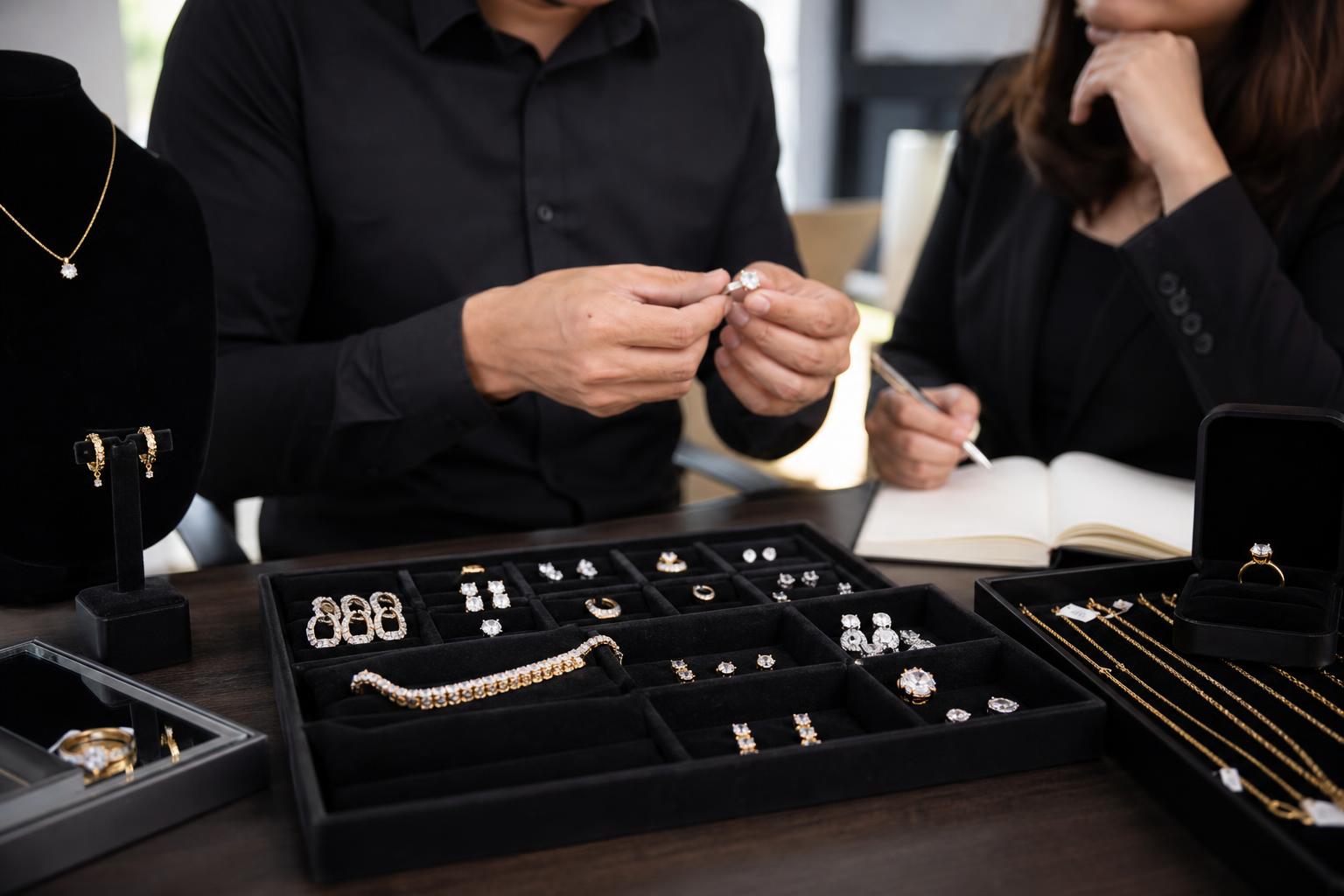
The UK jewellery trade is shifting faster than most retailers anticipated. Lab-grown diamonds now account for a significant share of engagement ring sales across the country, and independent jewellers who haven’t yet built a reliable wholesale supply line are losing ground to competitors who have. The economics are straightforward: lab-grown stones offer better margins, stronger consumer appeal among younger buyers, and a product story that practically sells itself. But sourcing wholesale lab-grown diamond jewellery well requires more than finding the cheapest price per carat. It demands an understanding of certification standards, inventory strategy, supply chain reliability, and how to position these pieces in a market that still has questions. This guide is built for UK trade buyers who want to stock intelligently, price competitively, and grow their lab-grown category with confidence.
The Rise of Lab-Grown Diamonds in the Retail Market
Consumer Demand for Ethical and Sustainable Alternatives
British consumers under 40 are driving a fundamental change in diamond purchasing behaviour. Research from the International Grown Diamond Association shows that awareness of lab-grown diamonds among UK buyers exceeded 80% in 2025, and purchase intent continues climbing in 2026. The motivations are split roughly evenly between ethics and economics: buyers want stones that don’t carry the environmental and social baggage of mining, and they want a larger stone for their budget.
For retailers in Hatton Garden, the Birmingham Jewellery Quarter, and high streets across the UK, this isn’t a niche trend to monitor. It’s the primary growth segment. Jewellers who position lab-grown options prominently report that customers increasingly walk in asking for them by name. The conversation has shifted from “What is a lab-grown diamond?” to “What sizes do you carry?”
Price Advantages and Margin Opportunities for Retailers
The margin story is where lab-grown diamonds become genuinely compelling for trade buyers. A 1.00ct D VS1 excellent-cut lab-grown round brilliant currently wholesales at roughly £400-£600, depending on supplier and volume. The equivalent natural stone sits at £4,000-£5,500. Retail pricing for lab-grown pieces typically lands at 2.5x to 3.5x wholesale cost, delivering healthy margins that often exceed what natural diamonds produce in percentage terms.
Lab-grown diamond prices have stabilised considerably since the rapid declines of 2022-2023. The market has found something close to a price floor for commercial grades (D-H, VS2-SI1 in the 0.5-2ct range), which means retailers can stock with greater confidence that values won’t erode dramatically before pieces sell. This stability is critical for inventory planning and cash flow management.
Evaluating Wholesale Lab-Grown Diamond Quality
Understanding IGI and GIA Certification Standards
Every stone in your wholesale inventory should carry certification from either IGI or GIA. IGI remains the dominant grading body for lab-grown diamonds globally, and their reports are widely accepted across UK retail. GIA entered the lab-grown grading space more recently and now provides full 4Cs grading rather than the limited descriptive reports they initially offered.
One practical consideration: IGI-graded stones are generally 10-15% less expensive at wholesale than GIA-graded equivalents of the same specifications. This isn’t because IGI stones are inferior. It reflects market perception and the premium that GIA’s brand commands. For most UK retail settings, IGI certification provides excellent credibility at a better cost basis.
Identifying Superior Cut, Colour, and Clarity in Wholesale Batches
Cut quality is where wholesale batches vary most, and it’s where your eye matters. A stone graded “Excellent” on paper can still look lifeless if the table percentage sits above 62% or the depth runs beyond 63%. For round brilliants, target table percentages of 54-58% and depth percentages of 60-62.5% for stones that genuinely perform.
When evaluating wholesale lots, reject any batch where more than 15% of stones fall outside your target specifications. Consistency matters enormously for retailers building a reputation. Maitri Diamonds, for instance, focuses specifically on commercial-grade inventory in the 0.5-3ct range with D-H colour and VS2-SI1 clarity, which reflects the specifications that actually move in UK retail. Suppliers who understand this sweet spot save you the time of sorting through off-spec stones.
Essential Inventory for Modern Jewellery Retailers
Bridal Collections: Engagement Rings and Wedding Bands
Bridal remains the highest-value category for lab-grown diamond jewellery. Stock your engagement ring programme around 1.00ct to 1.50ct round brilliants and ovals, as these two shapes account for approximately 75% of UK bridal diamond sales. Oval cuts deserve particular attention: they face up larger than rounds of equivalent carat weight, which appeals to buyers maximising visual impact.
Watch for the bow-tie effect in oval and marquise cuts. This dark shadow across the centre of the stone is a cut-quality issue that no grading report adequately captures. Inspect ovals individually or work with a supplier whose quality control catches this before stones reach you. For wedding bands, channel-set and pavé designs using 1.5mm-2.5mm melee stones offer strong margins and consistent sell-through.
High-Volume Essentials: Stud Earrings and Tennis Bracelets
Stud earrings in 0.50ct and 1.00ct total weight are your bread-and-butter lab-grown product. They’re impulse-friendly at retail price points between £150 and £450, they require minimal selling effort, and they generate repeat purchases. Stock them in both white gold and platinum settings to cover different price expectations.
Tennis bracelets have become the breakout category of 2025-2026. A 4.00ct total weight lab-grown tennis bracelet wholesales at approximately £800-£1,200, enabling retail pricing around £2,000-£3,500 depending on metal and specifications. That’s a price point where natural diamond equivalents would cost £8,000-£12,000 at retail. The value proposition practically explains itself to customers.
Selecting the Right Wholesale Partner
Assessing Supply Chain Transparency and Lead Times
Your wholesale partner’s reliability matters more than their price list. A supplier offering stones 5% cheaper but delivering inconsistently will cost you far more in lost sales and customer disappointment. Evaluate potential partners on three criteria: can they fulfil repeat orders to the same specification, what are their typical lead times for standard and custom orders, and do they hold UK-accessible inventory?
Ask for chain-of-custody documentation. Reputable suppliers can tell you whether their stones are CVD or HPHT grown, where manufacturing takes place, and what quality control steps occur before shipping. Suppliers who are vague about these details are ones to avoid. Maitri Diamonds, rated 4.7 stars on Google Reviews for quality, consistency, and service, exemplifies the transparency standard you should expect from any wholesale partner.
Custom Design and Bespoke Manufacturing Services
Independent jewellers and bespoke designers need a supplier who can do more than ship loose stones. The ability to source specific sizes, create matched pairs for earrings, or supply calibrated melee for custom designs separates a genuine trade partner from a transactional vendor.
Memo programmes are particularly valuable for independent retailers managing cash flow. These arrangements let you hold stock without upfront payment, converting to purchase only when pieces sell. Not every supplier offers this flexibility, so enquire specifically about memo terms, insurance requirements, and return conditions during your evaluation process.
Marketing Strategies for Lab-Grown Jewellery
Educating Customers on the Science of Lab-Grown Stones
Your sales team needs to explain the science confidently without overcomplicating it. Lab-grown diamonds are chemically, optically, and physically identical to mined diamonds. They’re created using either CVD (Chemical Vapour Deposition) or HPHT (High Pressure, High Temperature) methods that replicate the conditions under which natural diamonds form.
The key message for customers: these are real diamonds, not simulants like cubic zirconia or moissanite. They test as diamond on standard equipment, they’re graded on the same 4Cs scale, and they carry the same brilliance, fire, and scintillation. Train your staff to handle the “Is it a real diamond?” question with confidence and specificity. A well-informed salesperson converts sceptics into buyers.
Positioning Lab-Grown Pieces as Eco-Conscious Luxury
The sustainability angle resonates strongly, but don’t lean on it exclusively. Position lab-grown diamonds as a smart luxury choice that happens to be more environmentally responsible. The primary purchase driver for most UK buyers remains value: they can get a larger, higher-quality stone within their budget. Sustainability is the secondary motivator that reinforces the decision.
In your showroom and online presence, display lab-grown pieces alongside natural diamonds where possible. This direct comparison lets the product speak for itself. Customers who see a 1.50ct lab-grown stone next to a 0.70ct natural at similar price points rarely need much convincing. Your marketing should highlight specific savings in pounds rather than vague claims about being “affordable.”
Future Outlook for the Lab-Grown Wholesale Sector
The lab-grown diamond market in the UK is entering a maturation phase. Prices have largely stabilised for commercial grades, production technology continues improving stone quality, and consumer acceptance is no longer a barrier. For retailers, the strategic question isn’t whether to stock lab-grown diamonds but how to build the right inventory mix and supplier relationships to capture this demand profitably.
Expect continued growth in fashion jewellery categories like tennis bracelets, eternity rings, and layering pieces, where lab-grown pricing enables designs that would be prohibitively expensive with natural stones. The bridal segment will keep expanding its lab-grown share, likely reaching 40-50% of UK diamond engagement ring sales by 2028.
Retailers who establish strong wholesale partnerships now, with consistent supply, competitive pricing, and flexible stock arrangements, will be best positioned as the market grows. If you’re looking to strengthen your lab-grown supply chain, get in touch with Maitri Diamonds to discuss pricing, stock availability, and supply options tailored to your business. Building the right partnership today sets the foundation for where this market is heading tomorrow.