

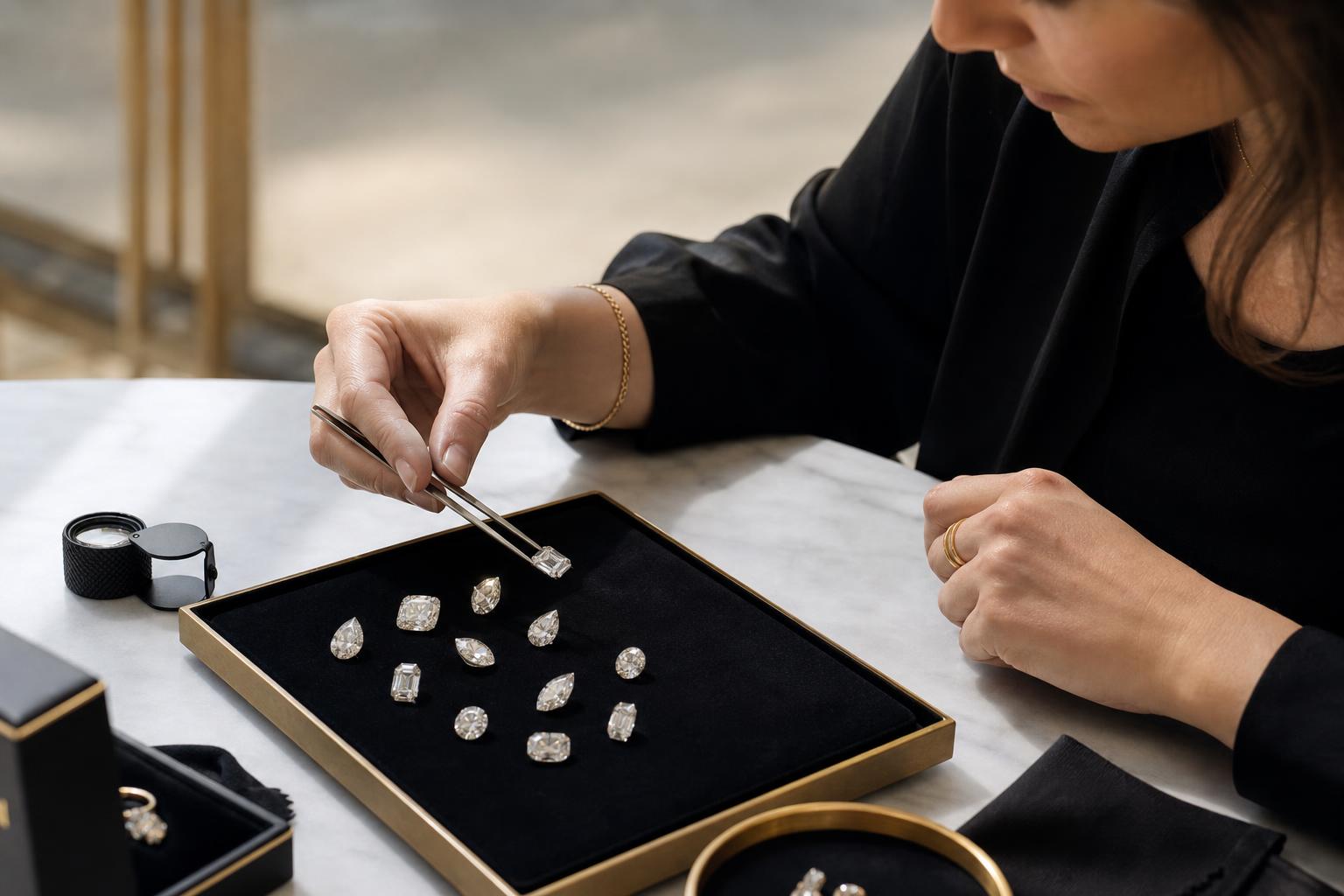
Every shape tells a different story on a customer’s hand, and the shape you stock determines how quickly it moves off your shelf. Whether your clients favour clean geometric lines or soft romantic curves, the diamond shapes in your lab-grown inventory directly influence sell-through rates, average transaction values, and repeat business. For UK jewellers building or refining their lab-grown collections, understanding how each shape performs commercially is just as important as knowing its optical properties. The right mix of shapes, graded between D and H colour with VS2 to SI1 clarity in the 0.5 to 3 carat range, can be the difference between a stagnant display case and consistent weekly sales. Shape selection also affects how you price, how you set, and how you market finished pieces to increasingly informed consumers who arrive having already researched their preferred cut online.
Understanding Diamond Shapes in the Lab-Grown Era
Shape and cut are not the same thing, though the terms are used interchangeably across the trade. Shape refers to the outline of the stone when viewed face-up: round, square, rectangular, oval. Cut refers to how well the facets are arranged to maximise light performance. This distinction matters because lab-grown diamonds offer a unique advantage here. Because they are grown under controlled conditions using CVD or HPHT methods, manufacturers can plan rough production around specific target shapes with far less waste than mined rough typically allows.
That planning capability has a direct commercial consequence. The variety of shapes available in lab-grown diamonds is broader and more consistently graded than what most independent jewellers could source in natural stones at the same price points. A 1.5 carat lab grown emerald cut diamond in E colour, VS1 clarity might sit at £1,200 to £1,800 wholesale, whereas a comparable natural stone would be three to five times that figure. This price differential means jewellers can stock a wider range of shapes without tying up excessive capital.
For lab grown diamond trade buyers evaluating the different shapes in lab-grown diamonds, the decision should be driven by three factors: local customer demand, setting compatibility, and margin potential. Rounds still dominate at roughly 60% of lab grown diamond engagement ring sales in the UK, but fancy shapes are gaining ground rapidly, particularly ovals and cushions. Stocking a considered mix, rather than defaulting to rounds alone, positions your business to capture the growing segment of buyers who want something distinctive.
The shapes covered below represent the core inventory any serious lab-grown stockist should consider. Each has specific optical characteristics, setting requirements, and commercial dynamics worth understanding before you commit purchasing budget.
Elongated and Elegant Step-Cut Varieties
Step cuts occupy a particular niche in the market. Rather than the explosive sparkle of brilliant-cut faceting, step cuts produce broad flashes of light and dark, a hall-of-mirrors effect that appeals to buyers seeking understated sophistication. These shapes demand higher clarity grades because their open facet structure reveals inclusions that brilliant cuts would hide. For trade buyers, that means your step-cut inventory needs to sit at VS2 or better to sell confidently.
The Sophisticated Lab Grown Emerald Cut Diamond
The emerald cut has seen a sustained resurgence since 2021, driven partly by celebrity engagement rings and partly by a broader shift toward Art Deco-inspired jewellery. For UK jewellers, this shape offers strong margin potential because consumers perceive emerald cuts as prestigious and unusual, even though wholesale costs are typically 15-25% lower than equivalent round brilliants.
Ideal proportions for a lab grown emerald cut diamond fall within a length-to-width ratio of 1.30 to 1.50, with a table percentage between 61% and 69% and depth between 61% and 67%. Stones outside these ranges can appear either too squat or too narrow, and they sit poorly in standard settings. When sourcing, pay close attention to the windowing effect: a dark centre caused by poor pavilion angles. This flaw is immediately visible to the naked eye and will kill a sale.
Emerald cuts work beautifully in solitaire, three-stone, and east-west settings. Stocking 0.75 to 2.0 carat stones in D to G colour gives you coverage across most price points your retail customers will encounter.
Asscher Cuts vs Emerald Cuts
The Asscher cut is essentially a square emerald cut, with a length-to-width ratio between 1.00 and 1.05. It shares the same step-cut faceting but produces a more concentric, almost hypnotic pattern when viewed face-up. Asschers tend to face up slightly smaller than emerald cuts of the same carat weight because their depth percentages run higher, typically 61% to 72%.
From a stocking perspective, Asscher cuts are a slower-moving shape but attract higher-value customers. They pair exceptionally well with halo and bezel settings. If your clientele includes bespoke designers working in the Birmingham Jewellery Quarter or Hatton Garden, keeping a small selection of Asscher cuts on memo can capture those specialist orders without committing significant capital.
Modern Brilliance and Geometric Precision
Brilliant-cut faceting arranged within geometric outlines gives you the best of both worlds: the sparkle consumers expect combined with a distinctive silhouette. These shapes tend to be the workhorses of a well-rounded lab-grown inventory.
The Sharp Profile of a Princess Cut Lab Grown Diamond
The princess cut remains the second most popular fancy shape in the UK market, though it has ceded some ground to ovals in recent years. Its square outline with pointed corners creates a modern, architectural look that appeals particularly to younger buyers. A well-cut princess cut lab grown diamond delivers exceptional brilliance because its chevron-pattern faceting is designed to maximise light return.
Target proportions should include a length-to-width ratio of 1.00 to 1.05 for square stones, a table percentage of 67% to 72%, and depth between 64% and 75%. One critical consideration for trade buyers: princess cuts are vulnerable to chipping at their pointed corners. This means you should always recommend V-prong or bezel settings to your retail partners, and you should inspect corners carefully before accepting stock.
Princess cuts offer strong value per carat because they retain more rough weight during cutting than rounds. A 1 carat princess cut typically wholesales at 20-30% less than a 1 carat round brilliant of equivalent grade, which gives your retail partners room to offer competitive prices while maintaining healthy margins.
Versatility of the Radiant Cut Lab Grown Diamond
The radiant cut combines the rectangular or square outline of an emerald cut with brilliant-style faceting underneath. This hybrid approach makes it one of the most forgiving shapes for colour and clarity: the crushed-ice sparkle pattern masks minor inclusions and distributes colour more evenly than step cuts.
A radiant cut lab grown diamond is an excellent recommendation for customers who love the emerald shape but want more fire and brilliance. Length-to-width ratios vary widely with this shape, from 1.00 (square) to 1.40 (elongated rectangular), so it pays to stock a range. The most popular ratio for engagement rings sits between 1.15 and 1.30.
Radiants are particularly well-suited to fancy colour lab-grown diamonds. If you stock any fancy yellows or pinks, the radiant cut will intensify the colour saturation more effectively than almost any other shape. This makes them a strong choice for statement pieces and coloured diamond collections. Maitri Diamonds maintains consistent availability across radiant cuts in commercial grades, which means you can reorder matching stones for three-stone settings or pairs without the sourcing delays that plague inconsistent suppliers.
Soft Curves and Romantic Silhouettes
Curved shapes dominate the bridal market right now. They photograph well on social media, they flatter most hand shapes, and they offer excellent perceived size for the carat weight. If you are expanding your lab-grown offering, these two shapes deserve priority shelf space.
The Classic Cushion Cut Lab Grown Diamond
The cushion cut has been a fixture of fine jewellery for over two centuries, and its popularity in the lab-grown sector is enormous. Its rounded corners and pillow-like shape create a soft, romantic aesthetic that works across vintage, modern, and bespoke settings. A cushion cut lab grown diamond typically features either a chunky facet pattern (producing broad flashes) or a crushed-ice pattern (producing smaller, scattered sparkle). Both have their buyers, so understanding which your local market prefers is worth the research.
Ideal proportions include a length-to-width ratio of 1.00 to 1.10 for square cushions or 1.15 to 1.25 for slightly elongated versions. Table percentages between 56% and 68% and depth between 61% and 68% generally produce the best light performance. Cushion cuts are forgiving on colour, with most buyers unable to distinguish between F and H grades once the stone is set in white gold or platinum.
For trade buyers, cushion cuts represent reliable inventory. They move consistently, pair well with halo settings that increase perceived size, and wholesale at competitive prices relative to rounds. Keeping stock across the 0.7 to 2.0 carat range covers the vast majority of engagement ring enquiries.
Maximising Finger Coverage with an Oval Cut Lab Grown Diamond
The oval cut is arguably the fastest-growing shape in the UK engagement ring market. Its elongated silhouette creates the illusion of a larger stone and visually lengthens the wearer’s finger, which makes it flattering on virtually every hand type. An oval cut lab grown diamond in 1.5 carats will face up approximately 10-15% larger than a round brilliant of the same weight.
The critical quality factor with ovals is the bow-tie effect: a dark shadow across the centre of the stone caused by light leakage. Every oval displays some degree of bow-tie, but well-cut stones minimise it to a faint shadow rather than a distracting dark band. Unfortunately, bow-tie severity is not captured on grading reports, so you need to inspect stones visually or work with a supplier whose quality control catches this issue before shipping.
Preferred length-to-width ratios for ovals range from 1.35 to 1.50, with 1.40 being the sweet spot for most UK consumers. Ovals work brilliantly in solitaire, three-stone, and cluster settings. Given the current demand trajectory, this shape should represent a meaningful portion of any jeweller’s lab-grown inventory.
How Lab-Grown Technology Impacts Shape Selection
The manufacturing process behind lab-grown diamonds has direct implications for which shapes deliver the best quality at each price point. Understanding these technical nuances helps you make smarter purchasing decisions.
Clarity Considerations for Step Cuts
CVD-grown diamonds occasionally exhibit faint striations or growth lines that are invisible in brilliant-cut shapes but can become noticeable in step cuts under certain lighting. When sourcing emerald or Asscher cuts, request stones that have been specifically screened for these growth characteristics. A reputable supplier will have already graded for this, but it pays to verify.
Step cuts in VS2 clarity can occasionally show inclusions that would be completely hidden in a round brilliant of the same grade. For this reason, many experienced trade buyers purchase step cuts at VS1 or better, accepting the slightly higher cost per carat in exchange for confident, no-explanation sales. If your supplier offers memo programmes, use them to evaluate step cuts in person before committing.
HPHT-grown stones sometimes display a slight blue nuance under certain lighting conditions. This is more visible in step cuts than in brilliant cuts, so confirm the growth method and inspect under multiple light sources when building your step-cut inventory.
Colour Retention in Modified Brilliant Shapes
Brilliant-cut shapes like cushions, radiants, and ovals tend to concentrate colour in their corners and at the pavilion. In lab-grown diamonds graded D to F, this is rarely an issue. But in G to H colour stones, the colour concentration can become visible, particularly in larger sizes above 1.5 carats.
This has a practical implication for your stocking strategy. If you carry G or H colour stones in fancy shapes, prioritise settings in warm metals like yellow or rose gold, where the slight warmth becomes an asset rather than a liability. For white gold and platinum settings, stick to D to F colour in shapes that concentrate colour.
Radiant cuts are the most colour-retentive of the modified brilliant shapes, which is precisely why they excel in fancy colours but require slightly higher colour grades in white stones. Cushion cuts fall in the middle, while ovals tend to distribute colour more evenly across the stone.
Choosing the Right Shape for Your Setting and Style
Your shape selection should be guided by what your customers actually buy, not by what looks appealing in a catalogue. Track your sales data by shape over the past twelve months. If ovals represent 25% of your engagement ring sales but only 10% of your lab-grown inventory, you have a clear sourcing gap to address.
Consider these practical guidelines when building your shape mix:
- Rounds should form your base inventory, covering 40-50% of stock, but do not over-index on them at the expense of fast-growing fancy shapes.
- Ovals and cushion cuts deserve the next largest allocation, together representing 25-35% of your lab-grown stock.
- Emerald, radiant, and princess cuts serve as your specialist inventory, filling out the remaining 15-25%.
- Asscher, pear, and marquise shapes are best held on memo or sourced to order unless your data shows consistent demand.
Match shapes to your most popular settings. If you sell predominantly halo designs, cushion and oval cuts will move fastest. If your clientele favours clean solitaires, emerald and round cuts should dominate. Bespoke designers need access to a wider variety, which is where a supplier with broad, consistent inventory becomes essential.
Maitri Diamonds, rated 4.7 stars by customers for quality, consistency, and service, stocks the full range of commercial shapes in the grades and sizes that UK jewellers need most. Whether you are filling a specific gap in your display or building a comprehensive lab-grown collection from scratch, having a manufacturing-backed supplier with transparent pricing removes the guesswork from your purchasing decisions.
The shape your customer chooses is deeply personal, but the shapes you choose to stock are a business decision. Get it right, and your lab-grown offering becomes a genuine profit centre rather than a box-ticking exercise. If you are ready to refine your inventory or explore supply options tailored to your business, get in touch with our team to discuss pricing, stock availability, and flexible supply arrangements.