

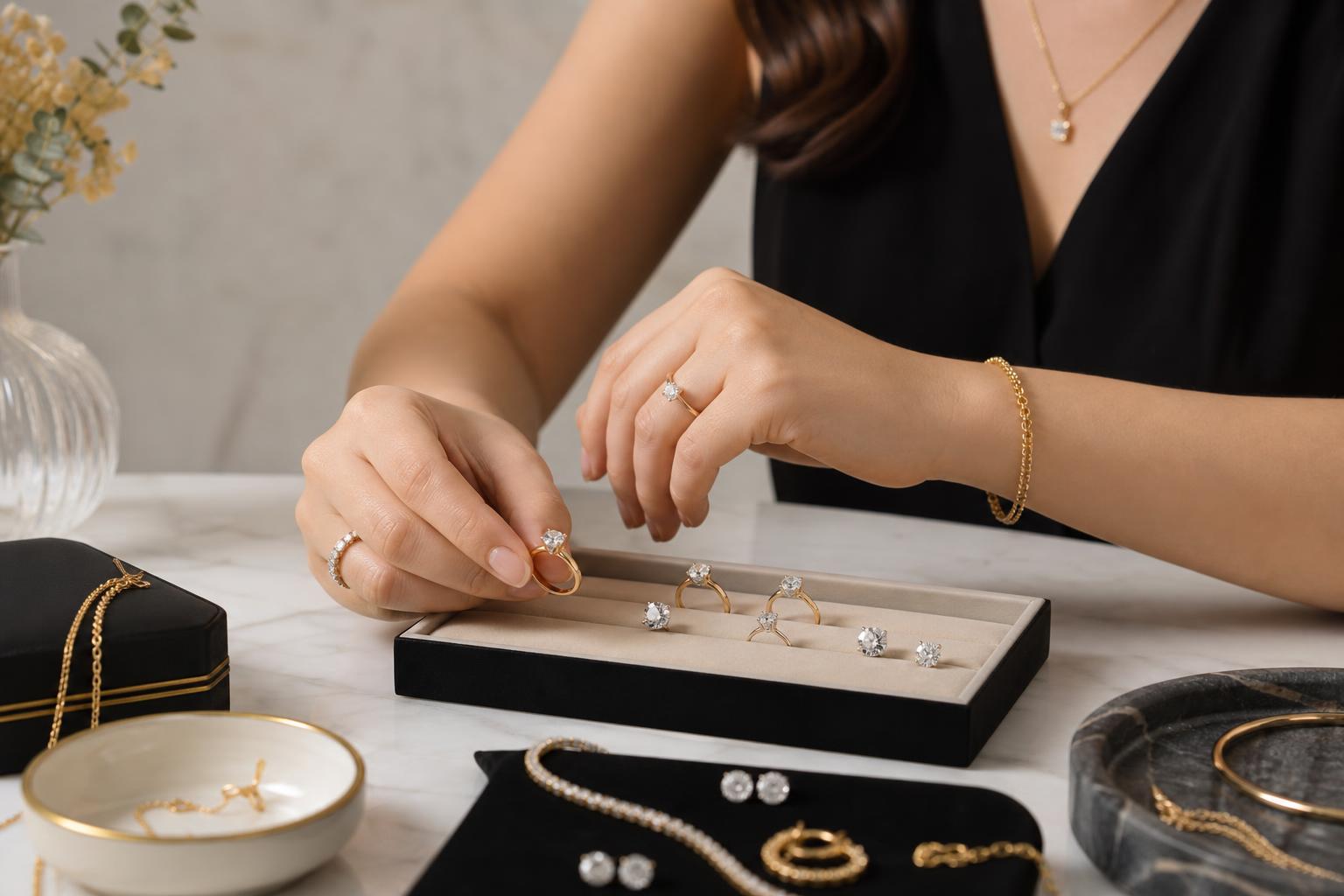
Lab grown diamond jewellery has moved well beyond the novelty stage. For UK jewellers stocking their cases in 2026, the question is no longer whether to carry lab grown pieces but which categories deserve the most shelf space. Consumer demand has fragmented across necklaces, bracelets, bangles, earrings, and rings, each with distinct margin profiles and sell-through rates. Understanding the full range of lab grown diamond jewellery types gives trade buyers a sharper sense of where to allocate their budgets and which designs will keep customers returning.
The Rise of Lab Grown Diamond Jewellery
Understanding Lab Grown Diamonds
Lab grown diamonds are chemically, optically, and physically identical to mined stones. They are produced through two primary methods: High Pressure High Temperature (HPHT) and Chemical Vapour Deposition (CVD). Both yield diamonds graded on the same 4Cs scale used for natural stones. For trade purposes, the most commercially relevant specifications sit in the D-H colour range and VS2-SI1 clarity bracket, typically between 0.5ct and 3ct. These are the grades that move fastest through independent retail because they hit the sweet spot between visual quality and price accessibility.
The IGI and GIA both certify lab grown stones, and UK consumers now expect to see grading reports at point of sale. Jewellers who stock certified stones in popular size brackets reduce friction at the counter and build repeat trust.
Benefits of Choosing Lab Created Stones
The commercial case is straightforward. Lab grown diamonds retail at roughly 70-85% less than equivalent natural stones, depending on size and grade. That gap gives jewellers two options: pass the saving on to attract price-sensitive buyers, or hold tighter margins on finished pieces. Most successful independents do both, adjusting by category.
Supply consistency matters just as much as price. Natural diamond sourcing can be unpredictable, particularly in popular commercial grades. Lab grown supply chains, especially those backed by manufacturing operations, offer repeatable quality across orders. Maitri Diamonds, for instance, maintains consistent inventory in the 0.5-3ct range specifically to reduce sourcing gaps for UK trade partners. When you can reorder the same quality stone month after month, your production scheduling and customer commitments become far more reliable.
Classic Lab Grown Diamond Necklaces and Pendants
The Timeless Tennis Necklace
The tennis necklace has become one of the strongest-performing categories in lab grown jewellery retail. A full tennis necklace in natural diamonds would price most customers out entirely, often exceeding £15,000-£25,000 at retail. Lab grown equivalents in G-H colour, VS2-SI1 clarity, using 3mm to 4mm round brilliants, can retail between £2,500 and £6,000 depending on total carat weight and metal choice.
For jewellers, this category offers excellent margin potential. The stones are typically smaller (0.10ct to 0.25ct each), which means per-carat wholesale costs are lower, and the visual impact of the finished piece is dramatic. Stocking tennis necklaces in 9ct and 18ct white gold covers both the entry-level and premium ends of the market. Rose gold versions have shown steady growth since 2024, particularly among buyers under 35.
Solitaire and Statement Pendants
Solitaire pendants remain the bread-and-butter gift purchase. A 1ct round brilliant lab grown pendant in F-G colour, set in 18ct white gold, retails comfortably around £800-£1,200 and carries healthy margins for the retailer. These are impulse-friendly price points that convert well during peak gifting seasons.
Statement pendants featuring fancy shapes like pear, marquise, or emerald cuts differentiate your display from high-street chains. Fancy shapes often wholesale at a slight discount to rounds, yet the perceived design value at retail can be higher. Bespoke designers in particular should consider pear-shaped drops, which have been trending strongly through Hatton Garden showrooms this year.
Elegant Lab Grown Wristwear
Diamond Tennis Bracelets
Tennis bracelets share the same commercial logic as their necklace counterparts but at a lower total price point, making them an easier conversion for walk-in customers. A 5ct total weight tennis bracelet in G colour, VS2 clarity, set in 18ct white gold, typically retails between £1,800 and £3,500.
Key specifications to watch when sourcing: look for consistent stone matching across the bracelet. Variations in colour or cut quality between stones become obvious in a linear setting. This is where supply reliability matters most. Working with a supplier who can provide matched parcels, consistent in colour, clarity, and make, saves significant time in production. Maitri Diamonds’ manufacturing-backed supply chain is particularly useful here, as repeat orders maintain the same quality standards.
Contemporary Lab Grown Bangles
Bangles represent an underserved niche that deserves more attention from independent jewellers. Unlike tennis bracelets, bangles offer structural rigidity, which allows for more creative stone placement: channel-set, bezel-set, or scattered designs all work well.
Lab grown diamonds make diamond-set bangles commercially viable for the first time at accessible price points. A half-eternity style bangle with 2ct total weight in round brilliants can retail under £2,000 in 9ct gold. These pieces appeal to customers who want something distinctive without the formality of a bracelet. They also stack well, encouraging multiple purchases over time, which is excellent for building lifetime customer value.
Earring Styles for Every Occasion
Essential Diamond Studs
Diamond studs are the highest-volume lab grown jewellery category in UK independent retail. They are the gateway purchase: a customer’s first lab grown diamond is very often a pair of studs. Stock them in 0.50ct, 0.75ct, and 1.00ct total weights as a minimum.
The critical detail most jewellers overlook is cut quality. Studs sit close to the ear, so brilliance and fire are everything. Prioritise stones with excellent or very good cut grades, table percentages between 54-58%, and depth between 60-62.5% for round brilliants. Poorly cut stones look dull in stud settings, and returns erode your margin quickly. Price points for 1ct total weight studs in G colour, VS2, 18ct white gold typically sit between £600 and £900 at retail.
Hoops and Drop Earrings
Hoop earrings set with lab grown diamonds have gained significant traction since 2024. Inside-out diamond hoops, where stones line both the inner and outer curve, offer a high perceived value relative to their actual carat weight. A 1.5ct total weight pair in 15mm diameter retails around £1,200-£1,800 and catches light from every angle.
Drop earrings provide an opportunity for bespoke designers to showcase creativity. Pear or oval drops suspended from a diamond-set bail create movement and visual interest that studs cannot match. These pieces command higher retail prices and attract customers shopping for occasion wear: weddings, anniversaries, and milestone birthdays. If you are designing bespoke drop earrings, consider sourcing stones on memo to reduce upfront capital commitment.
Lab Grown Diamond Engagement Rings and Bands
Popular Engagement Ring Settings
Engagement rings remain the emotional centrepiece of any jeweller’s offering. The most requested settings in 2026 are solitaires, hidden halo, and three-stone designs. Round brilliants dominate at roughly 55% of engagement ring sales, followed by oval cuts at around 20% and emerald cuts gaining ground at 10%.
For oval centre stones, pay attention to the bow-tie effect: a dark shadow across the centre caused by light leakage. Stones with length-to-width ratios between 1.35 and 1.45, combined with excellent symmetry, minimise this issue. A 1.5ct oval in E-F colour, VS1, set in a platinum solitaire mount, retails between £2,500 and £4,000. That price point would barely cover the stone alone in the natural diamond market.
Eternity and Wedding Bands
Eternity bands are a natural upsell alongside engagement rings and a strong standalone anniversary purchase. Full eternity bands in 2mm round brilliants, totalling 1.5-2ct, retail between £800 and £1,500 depending on metal choice. Half eternity bands offer a lower entry point and are more comfortable for daily wear.
Shared-prong and micro-pavé settings maximise the visible diamond surface area while using smaller stones, keeping wholesale costs manageable. These bands pair well with most engagement ring styles and should be displayed together in your cases to encourage combination purchases.
Selecting the Right Lab Grown Piece
The range of lab grown diamond jewellery available to UK jewellers in 2026 is broad enough to fill every category in your display cases, from entry-level studs through to statement engagement rings. The key is matching your stock profile to your customer base. High-footfall locations benefit from volume categories like studs and solitaire pendants. Bespoke studios should lean into tennis necklaces, bangles, and custom engagement rings where margins are stronger.
Whichever categories you prioritise, sourcing consistency determines your long-term success. Inconsistent quality between orders creates production delays, customer complaints, and eroded trust. Working with a supplier who understands UK retail behaviour, pricing expectations, and the specific grades that sell, rated 4.7 stars by customers for quality, consistency, and service, makes a measurable difference to your bottom line.
If you are looking to refine your lab grown diamond stock or explore supply options tailored to your business, our team can help with pricing, availability, and flexible arrangements including memo programmes. Get in touch to discuss what works for your operation.